🔪 Evil Pumpkin Ghazala Mk.2 Has Arrived!
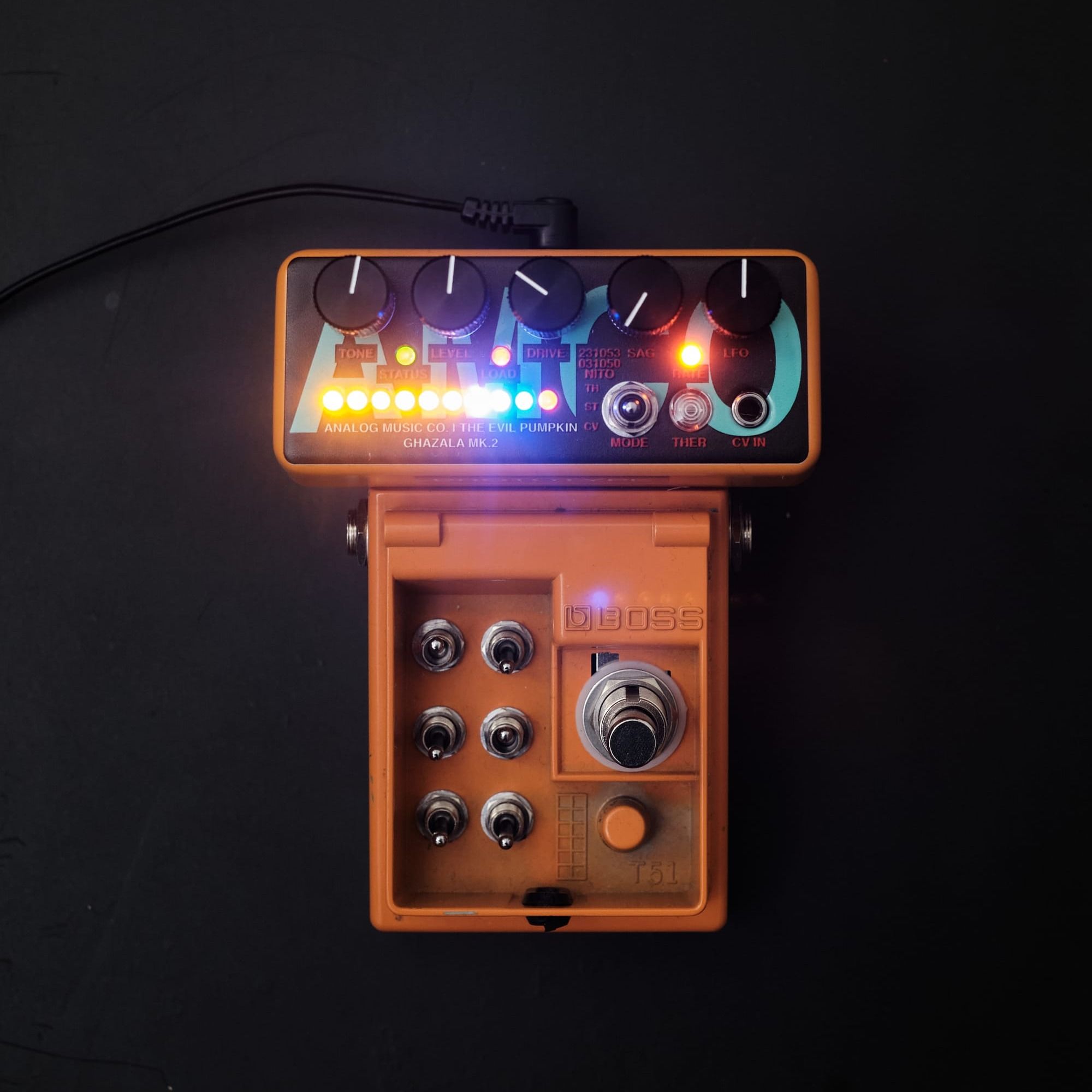
If you’re asking yourself what the hell you’re looking at, then we made it right. That means you asked the right question.
This is the new Evil Pumpkin Ghazala Mk.2.
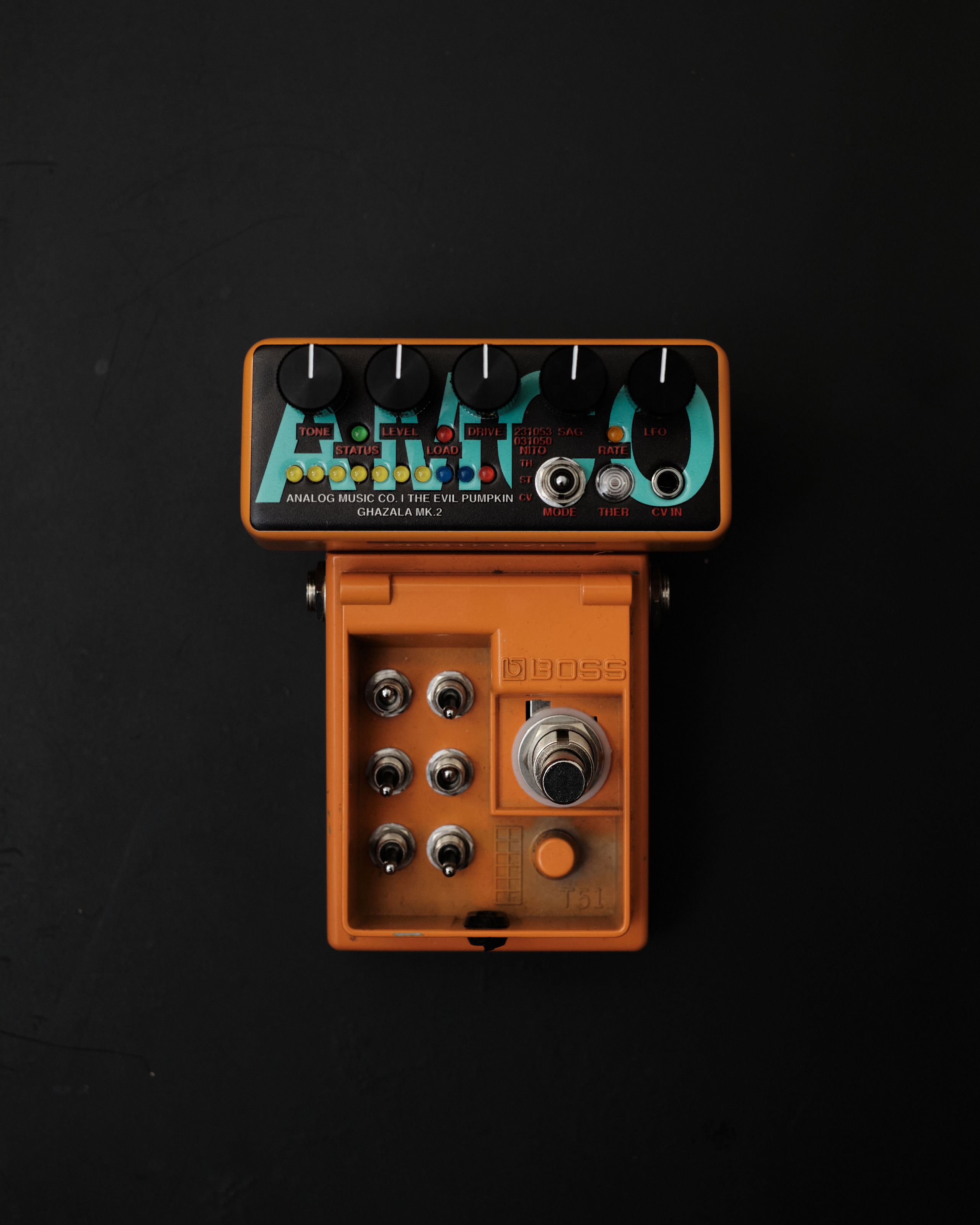
You might recall last year I considered pulling the plug on this whole project: it’s a massive pain in the ass to scale. But a lot has happened since then, chief among them the realization that Pumpkin IS the core, the identity of AMCO. This project gets the absolute maximum of my knowledge and skill. I don’t care what the build time is (and it’s a lot) the Pumpkin is the crown jewel, and it stays that way.
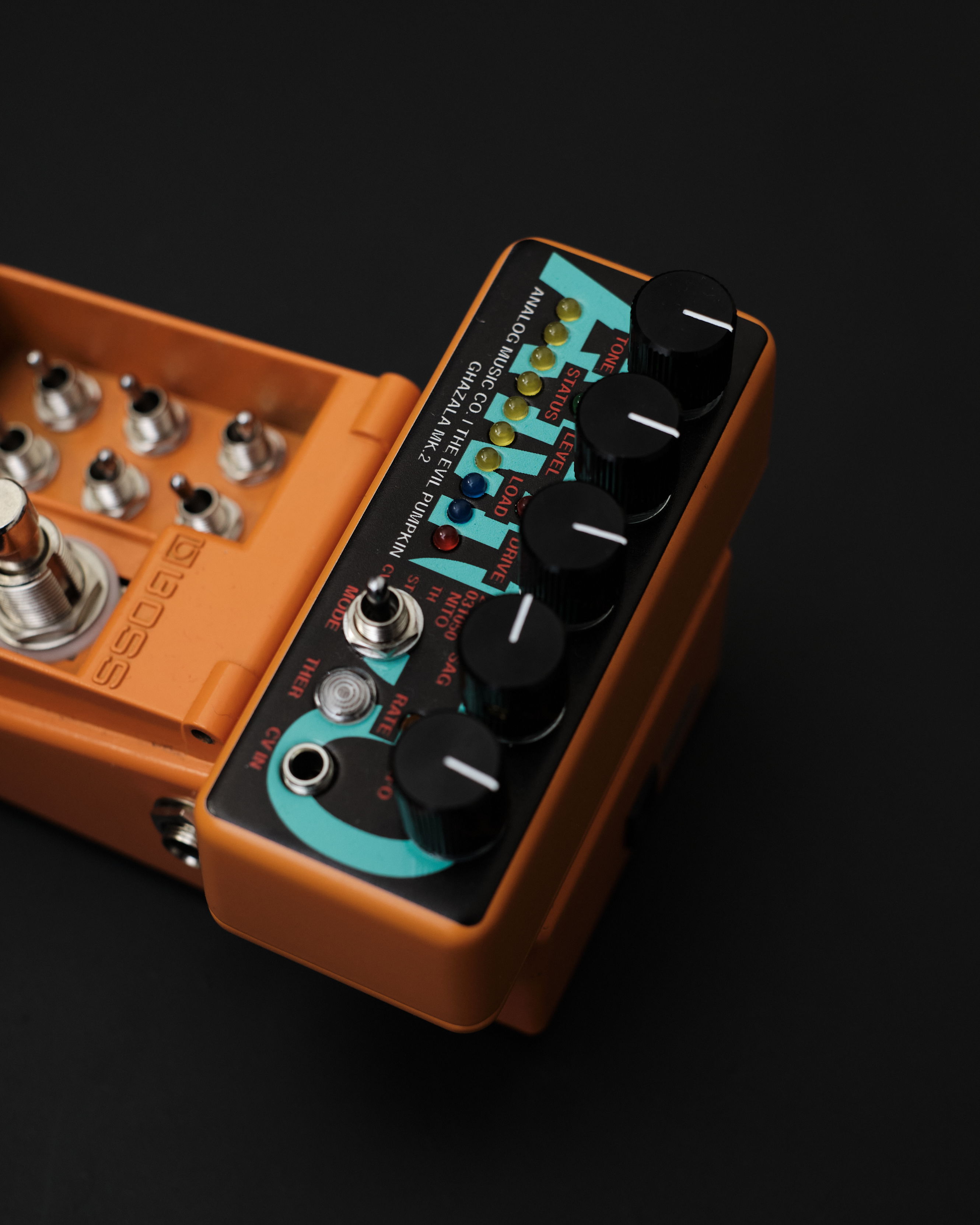
With that settled, let’s get into what the hell is going on with this new iteration. The new format, obviously. I loved the wide format of the first Ghazala, but I wanted to revisit the original concept, which is a single DS-1, just with a little twist. The Ghazala 2 is a strictly circuit-bent unit. We are using and bending the original DS-1 PCB, just like we did on the early units. The additional “T” section is, quite literally, the brain of this operation. It’s where all the controls, the fun stuff, and the chaos happens. And yes, it’s all analog.

This is the first time we've substantially modified the core DS-1 circuit. I spent an absurd amount of time researching the original circuit, studying our early units, and tearing through every major mod out there: from Simon the Magpie and Wampler to Keeley, Analogman, and every obscure forum post. While there is a ton of information to try and test, most of what’s under the hood is my own ideas. We ended up replacing 15 components on the DS-1 schematic before the bend even starts to push this device squarely into fuzz-fuzzstortion territory. I think we succeeded. The bend itself has been reworked, too; each switch now has a more thought-out and intended function.
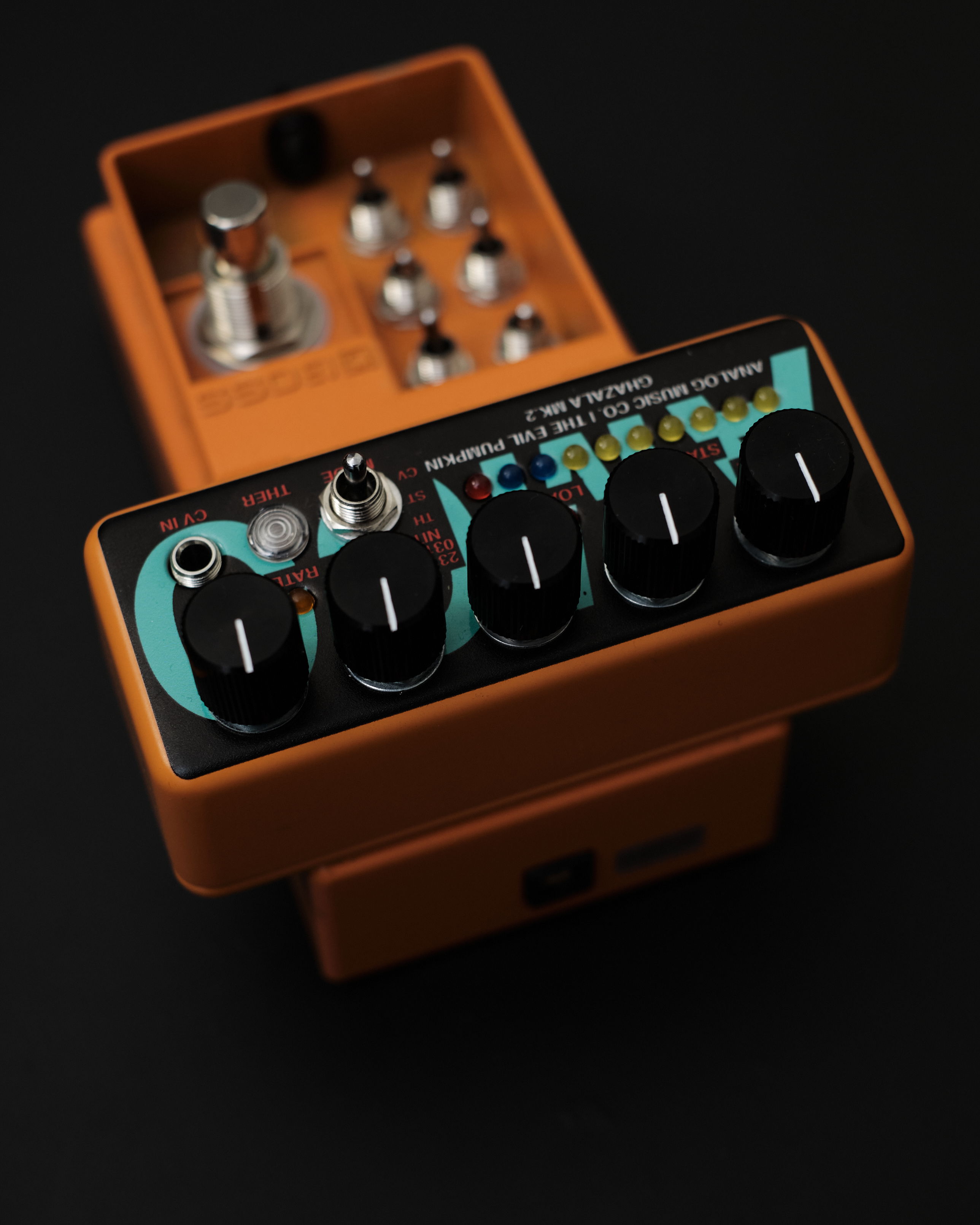
Now for the features that define this thing. CV controls were very much requested, and now the Pumpkin has them. It handles signals up to 8V, making seamless integration into your modular or pedal system easy. For example, you can pair the Pumpkin with So High So Low via Korg or Arturia controllers and have a hell of a lot of fun with it.
Then there is the SAG knob. This is brand new. I’ve never seen anyone try this on a DS-1, at least not like this. It starves the IC, creating a range of nice fuzz textures right up to hard gating. It also influences the pitch of drones and oscillators, and is a blast to play with. The LFO survived, too, something I was weighing to keep or drop, but I reworked it. It’s now capable of slower pulses, which is extremely useful for generating soundscapes and textures.
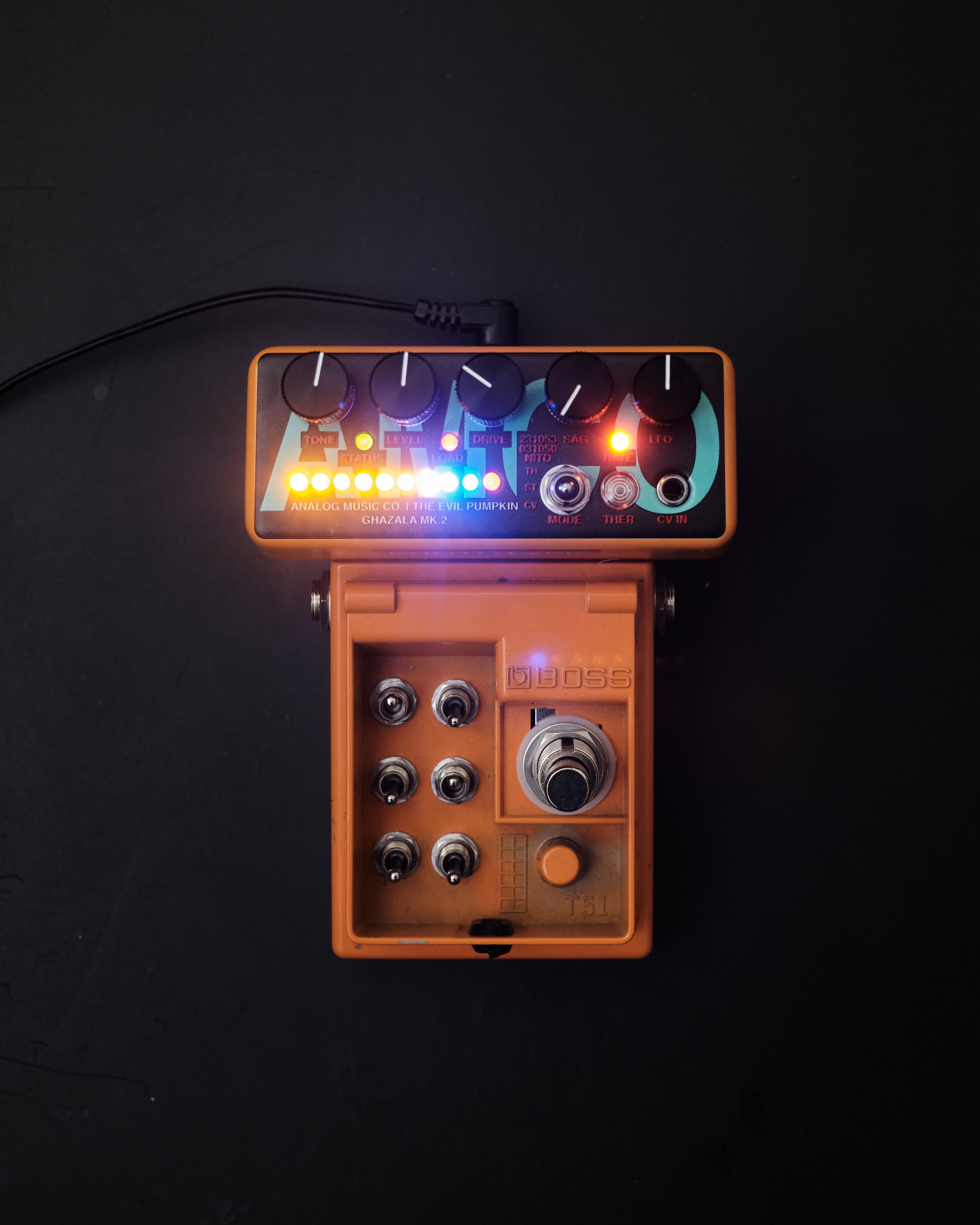
When it comes to visuals, we have the LOAD / Overload Indicators. This is where form meets function. These LEDs are functionally acting as the clipping diodes in the circuit. But they look cool as hell, too: they make the device feel alive, fun, and interactive. The harder you hit it, the brighter they shine - it’s quite cool; the device reacts to your actions. Speaking of visuals, I also finally managed to implement the UV meter, something I’ve been obsessed with for ages. The function is super cool and makes the entire device truly come alive. It looks killer on video and photos, and I hope it inspires you to post and share your Evil Pumpkins even more.

The theremin, which is the audience favorite, is present too, just like all the previous versions of the Evil Pumpkin, and again, it makes the device even more interactive and super fun to mess with.
Finally, maybe not the funnest bit, but useful, especially for live gigs: we replaced the mechanical flap/button bypass switch with a standard switch button. We hid the switches inside the battery compartment previously covered by the flap. It makes the Pumpkin more compact, more robust, and better suitable for the live environment.
Overall, this Pumpkin is the pinnacle of my design abilities as of today. I’m very happy with every bit of it, and hope you will like it as much as I do. This is an absolute beast of a device you can spend hours messing with.